Adding & Marking Points on Google Maps: The Ultimate Guide to Multi-Location Mapping
Whether you’re planning a road trip, showcasing store locations, or mapping out project sites, the ability to add multiple points to a map is a fundamental need. Our series of guides—covering Add Multiple Points on Google Maps(link), Google Map Multiple Points(link), Google Map with Multiple Points(link), Map Multiple Points on Google Maps(link), and Add Points on Google Map(link)—explore every angle of this task. This summary article cuts through the noise to give you the clear, actionable truth about multi-point mapping and introduces the solution that makes it simple.
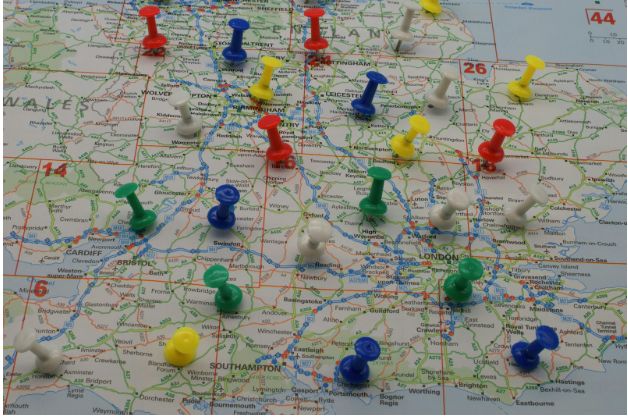
The Core Challenge: One Goal, Many Complex Paths
The common goal is straightforward: take a map and place more than one marker on it. However, as our articles detail, the methods to achieve this range from moderately tedious to highly technical, each with significant drawbacks.
Method 1: Using Google My Maps (The Manual Tool)
This is the most common method referenced in guides like Add Multiple Points on Google Maps. It’s a free tool within the Google ecosystem.
- -The Process: You create a custom map in Google My Maps, then manually search for or click to add each point one-by-one. You can add basic names and descriptions.
- -The Problems: The interface can be slow and clunky. Adding a large number of points is extremely time-consuming. Customization of markers is very limited (a handful of generic icons). The final map is hosted by Google, and embedding it on your website results in a very basic, often unstyled iframe that lacks professionalism.
Method 2: The Google Maps Platform API (The Developer’s Route)
For a custom result on your own website, this is the powerful, code-driven method. It’s the underlying technology hinted at in technical queries like Google Map with Multiple Points.
- The Process: This requires setting up a Google Cloud Project, enabling billing and APIs (Maps JavaScript, Geocoding), writing JavaScript code to define each point’s coordinates, and then styling the map.
- The Reality: This method is not for beginners. It involves managing API keys, understanding code, and handling ongoing maintenance. While it offers total control, the complexity is a massive barrier for marketers, business owners, or anyone without web development resources.
Method 3: Manual Coding & Third-Party Plugins
Some of our articles touch on searching for plugins (for platforms like WordPress) or piecing together code snippets. This often leads to dependency on poorly supported plugins that can break, conflict with your theme, or offer bloated, inefficient code.

The Universal Pain Points of Adding Multiple Points
Across all the methods described in our articles Map Multiple Points on Google Maps and Add Points on Google Map, the same core frustrations emerge:
- 1. Sheer Time Consumption: Manually adding points one-by-one is not scalable. What takes minutes for 3 points takes hours for 30.
- 2. The Address-to-Coordinate Problem: Getting the precise latitude and longitude for addresses (geocoding) is a separate, technical step in the API process.
- 3. Lack of Branding & Style: Default red pins are generic. Your map doesn’t reflect your brand identity, making it look out of place on a professional website.
- 4. Poor User Experience for Viewers: A map with many default pins becomes a “sea of red,” cluttered and impossible to read. Grouping, clustering, and clear styling are needed but are complex to implement.
- 5. Embedding & Maintenance Hassle: Getting the finished map from the tool you built it in onto your website is often a second, technical challenge. Updating points later doubles the work.
MapsFun: The Direct Solution to Every Point-Adding Problem
MapsFun.com is built specifically to address every single pain point highlighted across our comprehensive guide series. It provides a third path: the power and customization of the API method, with the simplicity of a visual, no-code tool.
How MapsFun Revolutionizes Adding & Marking Points:
- 1. Add Points in Bulk, Visually: Forget one-by-one manual plotting. You can often add multiple locations via list or, more importantly, place points effortlessly with a visual, intuitive click-and-drag interface. It handles the geocoding (finding coordinates from addresses) automatically in the background.
- 2. Unlimited Customization at Your Fingertips: Choose from hundreds of custom icons or upload your own (e.g., your logo). Color-code your points by category, type, or status. This turns a generic map into a branded, informative visual tool.
- 3. Automatic Clustering for Cleanliness: When you zoom out on a MapsFun map with many points, they intelligently group into a single, numbered cluster. As you zoom in, they smoothly separate. This solves the “sea of red” problem instantly, guaranteeing a clean user experience at any zoom level.
- 4. Rich Info Windows for Every Point: Each marker can have its own detailed info window—not just a name. Add descriptions, photos, contact details, and even custom “Call to Action” buttons (e.g., “Get Directions,” “Book Here”). Each point becomes an interactive destination.
- 5. One-Click Embedding & Easy Updates: Your map is ready for your website instantly. Copy a single embed code and paste it into any site builder. When you need to add, remove, or edit a point, you do it once in your MapsFun dashboard, and the change is reflected live everywhere the map is embedded — no recoding, no re-embedding.
Why MapsFun is the Definitive Answer
The collective wisdom from articles on Google Map Multiple Points and Add Multiple Points on Google Maps shows that users are searching for a method that is both powerful and accessible. They are tired of the compromise.
- -Solves the Time vs. Quality Dilemma: MapsFun lets you create a high-quality, multi-point map in minutes, not hours or days.
- -Eliminates Technical Barriers: No APIs, no code, no complex setups. The power is placed directly in the hands of the person who needs the map.
- -Delivers a Superior End Product: The maps you create are not just functional; they are engaging, branded, and designed to communicate effectively with your audience.
In summary, the quest detailed across all our “adding points” guides reveals a universal need for a tool that bridges the gap between simple but limited free tools and powerful but inaccessible developer APIs.
MapsFun.com is that bridge. It transforms the tedious, technical task of plotting multiple points into a smooth, creative, and efficient process. It delivers a result that surpasses what you can achieve with the manual methods and rivals what a developer could build—but you control it.
Stop wrestling with manual plotting or complex code. Create stunning, informative multi-point maps in minutes. Start mapping the better way today at MapsFun.com.