Showing Many Locations on Google Maps: From Clutter to Clarity
The need to display many locations on a single map—be it for a store locator, event venues, or a service area—is a common challenge for businesses and organizations. Our guides, including [Google Map Show Multiple Locations](link), [Google Maps Mark Several Locations](link), and [Mark Several Locations on Google Maps](link), dive into the mechanics of this task. This article synthesizes those insights to reveal why showing many locations is harder than it seems and introduces the platform that transforms complexity into elegant simplicity.
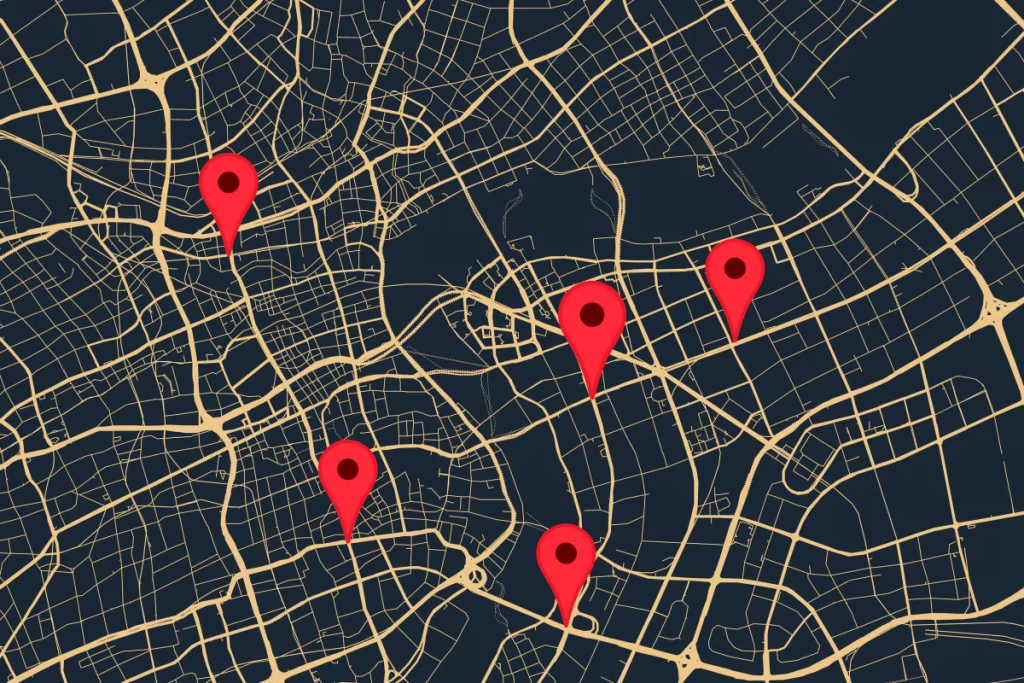
The Core Problem: Quantity vs. Usability
The fundamental goal is clear: take a large set of addresses or places and make them visible on a map. However, as our articles detail, most standard methods fail when moving beyond a handful of points. The primary challenge shifts from how to mark to how to manage.
The Traditional Approaches & Their Breaking Points:
1. Google My Maps (The Manual Method):
As explored in [Mark Several Locations on Google Maps](link), this free tool allows you to manually create a map and add locations. While it works in theory, it hits a wall with quantity.
The Breaking Point: Adding dozens or hundreds of locations is a soul-crushing, manual data-entry task. The resulting map becomes a chaotic “pin cushion” that is zoomed-out and useless for finding anything specific. The user experience for your website visitors is poor.
2. The Google Maps API (The Power Tool):
For a technically custom solution, this is the route hinted at in searches like [Google Map Show Multiple Locations](link). It involves coding and cloud platform management.
The Breaking Point: While it can handle many points, implementing advanced features like marker clustering (grouping nearby pins) and custom data management requires significant, ongoing developer expertise. It’s a resource-intensive project, not a manageable task.
3. Basic Website Plugins & Embeds:
Many website builders offer simple map widgets that allow one, maybe two, locations. Plugins that promise more often become bloated, slow, and difficult to style cohesively with your brand.
The Universal Friction Points:
Across all methods described in our articles, showing many locations introduces unavoidable friction:
- The Clutter Crisis: Too many default markers render a map unreadable.
- The Performance Drag: Loading dozens of individual markers can slow down your website.
- The Management Nightmare: Updating a list of locations (adding/removing) means manually editing a list, a spreadsheet, or code every single time.
- The Lack of Insight: A sea of identical pins provides no way to categorize or prioritize locations (e.g., flagship vs. standard stores, open vs. closed venues).
MapsFun: The Platform Built for “Many”
MapsFun.com is specifically engineered to solve the scale problem that breaks other tools. It doesn’t just let you show many locations; it lets you *organize, present, and manage* them with ease.
How MapsFun Masterfully Handles Many Locations:
1. Automatic, Intelligent Clustering (The #1 Solution to Clutter):
This is the killer feature for multi-location maps. MapsFun automatically groups nearby markers into a single, clean cluster. As a user zooms in, clusters smoothly break apart into individual pins. This makes a map with 100+ locations perfectly usable at any zoom level, eliminating the “pin cushion” effect instantly.
2. Batch Import & Easy Management:
Forget plotting one-by-one. MapsFun allows you to import locations in bulk from a spreadsheet or list. Even better, you can manage your locations from a clean dashboard, making updates, additions, or deletions a simple task that takes seconds. The map on your website updates live.
3. Visual Categorization with Custom Icons:
Turn your map into an intuitive legend. Use custom icons and colors to categorize your locations. Show pharmacies with a cross, cafes with a coffee cup, and warehouses with a truck icon. This allows visitors to scan and understand the map’s data at a glance, a feature missing from basic methods described in [Google Maps Mark Several Locations](link).
4. High-Performance Embeds:
A MapsFun map is optimized for speed. Whether you have 20 or 2,000 points, the embedded map loads quickly and smoothly on your website, preserving your site’s performance and user experience.
5. Advanced Filtering (For the User):
For truly complex location networks, you can create maps where users can filter what they see. For example, “Show only locations with drive-thrus” or “Show service centers open after 6 PM.” This hands control to your visitor, helping them find *their* relevant location from your many.
MapsFun provides the tools to manage complexity, transforming raw location data into a user-friendly interactive guide.
Why MapsFun is the Essential Tool for Multi-Location Display
The search queries covered in our articles—[Google Map Show Multiple Locations](link), etc.—reveal a user base hitting the limits of free tools and fearing the complexity of developer solutions. They need a tool that operates at scale without requiring scale-level resources.
- Solves the Clutter Problem: Automatic clustering is non-negotiable for professional multi-location maps, and MapsFun makes it a default, simple setting.
- Solves the Management Problem: It provides a central, user-friendly dashboard for your location data, breaking the cycle of manual edits and code updates.
- Solves the Communication Problem: Through categorization and filtering, it turns an overwhelming data dump into a clear, communicative visual tool for your audience.
In summary, our series of guides on showing multiple locations highlights a critical gap: the leap from showing a few to showing many is not incremental — it’s transformational. It requires a different class of tool, one designed for data management and user experience, not just simple plotting.
MapsFun.com is that transformational tool. It is the dedicated platform for anyone who needs to display many locations professionally. It handles the heavy lifting of data management and visualization, so you can focus on using the map to connect with your customers, attendees, or community.
Stop letting the challenge of “many” limit your map’s potential. Showcase all your locations with the clarity and professionalism they deserve. Discover the easy way to manage many locations at MapsFun.com.